


Cost of Traditional PBX vs Hosted PBX: A 2026 Strategic ROI Analysis

What if the hardware sitting in your server room isn't just an asset, but a ticking clock counting down to the 2027 PSTN sunset? As we move through 2026, over 70% of businesses have already migrated to cloud-based platforms to avoid the obsolescence of legacy infrastructure. The real cost of traditional pbx vs hosted pbx is no longer found in a simple side-by-side price list. It's hidden in the high monthly rentals for copper lines and the expensive technician call-outs that keep aging systems on life support.
You've likely noticed that these on-premise systems can't keep pace with a hybrid workforce. It's frustrating to pay for hardware that limits your growth instead of enabling it. This article promises to show you how to architect a more resilient, cost-effective business by offloading technical debt to managed cloud environments. We'll provide a strategic ROI analysis of the total cost of ownership differences between legacy systems and cloud communication. You'll discover how to eliminate hardware obsolescence, reduce overheads, and empower your regional team with a system designed for the future.
Key Takeaways
- Shift from heavy upfront hardware investments to predictable monthly operational expenses to better preserve capital for strategic growth.
- Analyze the total cost of traditional pbx vs hosted pbx by comparing expensive proprietary hardware against modern, versatile solutions like the Yealink T31P IP Phone.
- Identify hidden legacy overheads, such as the energy required for cooling server rooms and the costly battery infrastructure needed for load shedding resilience.
- Quantify the ROI of architectural agility by enabling a seamless hybrid work environment that supports your team across the region.
- Secure your digital evolution with expert IT assistance to ensure a smooth transition from aging copper lines to high-performance cloud infrastructure.
The Evolution of Business Voice: Traditional vs. Hosted PBX
The landscape of corporate communication is undergoing a profound renewal. Traditional PBX systems, once the iron-clad standard of the office server room, now face a reality where physical wires no longer meet the demands of a mobile, agile workforce. As we move through 2026, the discussion around the cost of traditional pbx vs hosted pbx is no longer just about comparing line items on a spreadsheet. It's about architecting a system that can withstand the sunsetting of legacy infrastructure. The shift from proprietary hardware to software-defined unified communications is the catalyst for a fresh start in business efficiency.
In South Africa, this evolution is particularly urgent. With the 2027 PSTN phase-out looming, the reliance on copper-based systems has become a strategic liability. Forward-thinking organizations are moving away from the "black box" in the basement, opting instead for communication as a service delivered via high-performance cloud infrastructure. This transition isn't just a technical upgrade; it's a move toward digital sovereignty and operational resilience.
The Anatomy of Legacy On-Premise Systems
Legacy business telephone systems are defined by their physical presence. They require dedicated PBX cabinets, complex internal wiring, and expensive trunk lines. This architecture creates a rigid environment where growth is often stifled by the number of physical ports available on a hardware card. If your team expands beyond the capacity of your current cabinet, you're forced into a costly hardware overhaul. Furthermore, these systems represent a single point of failure. If the localized hardware fails or the physical lines are damaged, your entire voice network goes dark, leaving your organization isolated.
The Architecture of Hosted PBX
Modern communication demands a more fluid approach. Hosted PBX solutions virtualize the traditional switchboard, replacing physical modules with sophisticated software. By leveraging high-performance Virtual Private Servers, these systems offer 99.9% uptime that localized hardware simply cannot match.
This architecture utilizes VoIP technology to convert voice into data packets, allowing your team to connect from anywhere with an internet connection. The switchboard lives in a secure, managed cloud environment, which offers several distinct advantages:
- Scalability: Add or remove users instantly without touching a single wire.
- Stability: Cloud-hosted environments are shielded from local power outages or hardware failures.
- Agility: Seamlessly integrate voice with your broader digital ecosystem, including Microsoft 365 and CRM platforms.
By virtualizing the switchboard, you eliminate the need for specialized on-site technicians and proprietary hardware cards. You're no longer buying a box; you're investing in a scalable, mission-driven communication platform that grows alongside your business.
Upfront Capital vs. Monthly Operational Costs: A Side-by-Side Breakdown
Decisions about communication infrastructure are often framed as technical choices, but they're fundamentally financial ones. The cost of traditional pbx vs hosted pbx represents a pivot from capital-heavy investment to operational fluidity. Instead of tying up liquidity in hardware that begins depreciating the moment it's unboxed, businesses can now leverage their capital for core growth initiatives. This shift allows for a more rhythmic budget that breathes with the organization's needs rather than being stifled by rigid hardware cycles.
Traditional systems demand proprietary handsets and intensive site labor for every installation. Contrast this with modern IP phones like the Yealink T31P, which arrive ready to integrate into your existing network. This plug-and-play capability is made possible by the underlying technology; for a deeper look, check this FCC explanation of VoIP, which outlines how digital voice signals bypass traditional line constraints to offer global reach. By removing the physical limitations of the office wall, you're not just saving on hardware; you're investing in architectural agility.
The Capital Expenditure of Traditional Systems
Accounting for a legacy system involves more than just the purchase of the PBX unit. It requires significant upfront capital for licensing fees and the physical installation of telephone lines. Many organizations face what we call the "expansion tax." When you need to add more users, you often discover that your current cabinet is full, necessitating the purchase of expensive new hardware cards or even a complete system overhaul. Research indicates that for a 20-user business, the upfront cost for traditional hardware and installation can reach between $13,000 and $30,000. This capital remains locked in a system that loses value every year, creating a cycle of technical debt that's difficult to escape.
The Operational Efficiency of Hosted PBX
Transitioning to Hosted PBX systems moves your communication expenses into the realm of OpEx. This model favors predictable per-user pricing, allowing you to budget with precision across an entire national organization. One of the most significant benefits is zero-touch provisioning. Because the system is cloud-native, new users can be added remotely without the need for on-site technicians or complex wiring. You're also protected from the hidden costs of software maintenance. In the cloud, updates are inclusive and automatic, ensuring you always have access to the latest security protocols and features without paying for a "version upgrade."
If you're ready to transition your communication to a more sustainable model, exploring Hosted PBX options can provide the clarity your budget needs. This move empowers your business to scale effortlessly, ensuring your communication architecture is always a catalyst for progress rather than a financial anchor.
The Hidden Costs of Maintaining Legacy Infrastructure
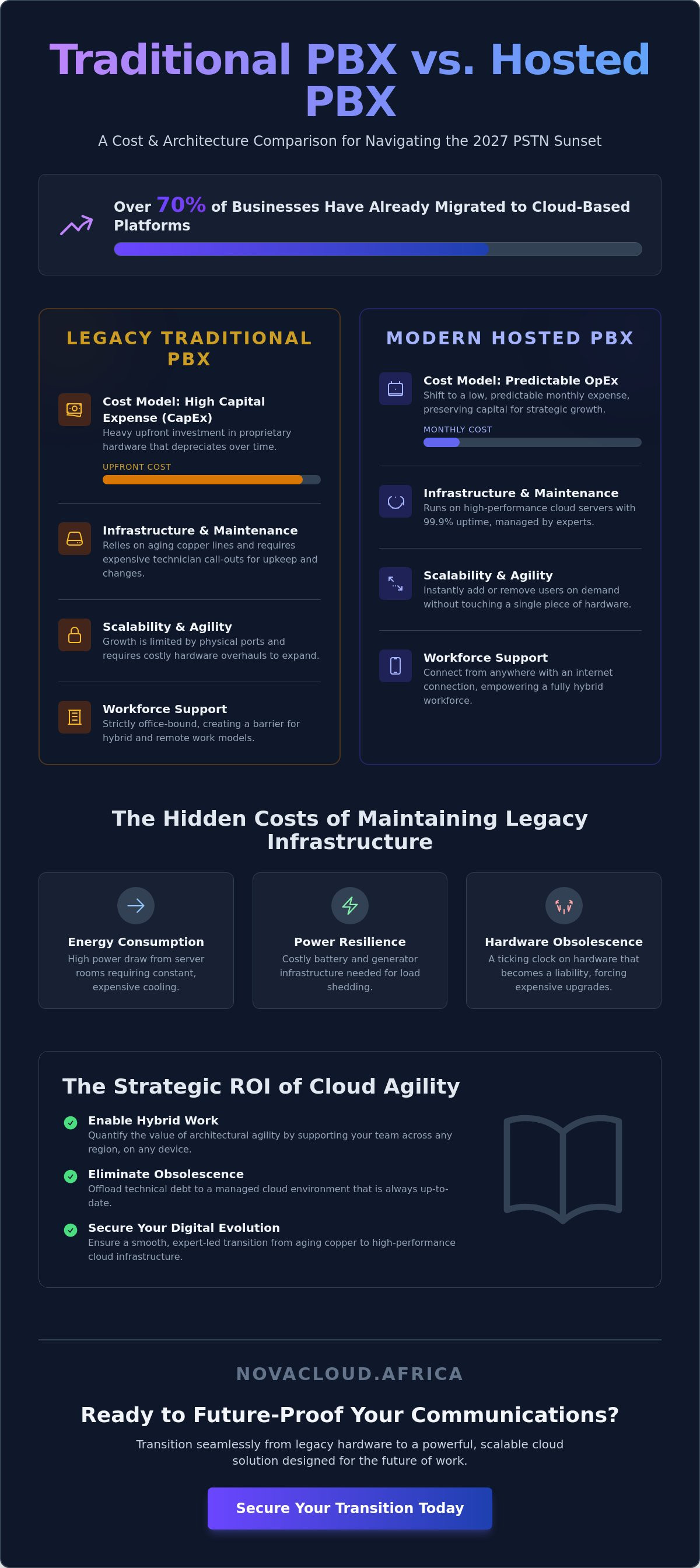
The true burden of legacy voice technology often stays hidden beneath the surface, masked by the familiarity of existing routines. When evaluating the cost of traditional pbx vs hosted pbx, many leaders overlook the heavy operational tax of maintaining physical hardware in a volatile environment. In South Africa, this tax is amplified by the relentless cycle of load shedding and the increasing degradation of the national copper grid. A physical PBX isn't just a box; it's a commitment to 24/7 power, climate control, and a localized infrastructure that's increasingly vulnerable to external risks.
Technical debt is another silent budget killer. As manufacturers pivot toward cloud-native architectures, finding spare parts for discontinued legacy systems becomes a costly scavenger hunt. You might find yourself paying a premium for a refurbished hardware card just to keep your switchboard alive. This reliance on aging components creates a fragile communication environment where a single hardware failure can lead to catastrophic downtime. Understanding the shift toward digital resilience is essential; as this Forbes Advisor on VoIP guide explains, moving to data-driven voice solutions removes these physical points of failure entirely.
Maintenance, Repairs, and Call-Out Fees
Many organizations are trapped in a "Break-Fix" cycle that's both reactive and expensive. Traditional systems require specialized technicians for even minor configuration changes or repairs. These call-out fees add up quickly, especially when you're locked into proprietary systems that prevent your internal IT team from making simple adjustments. The cost of downtime during these repair windows is often far greater than the technician's invoice. Every hour your phones are silent is an hour of lost regional reach and missed opportunities. By transitioning to Hosted PBX, you move away from this reactive model toward a system that's managed and updated remotely, ensuring your voice architecture remains clear and consistent.
The Environmental and Power Overhead
Running a server room is an energy-intensive endeavor. A physical PBX server, along with the necessary cooling systems to prevent overheating, drives up your office electricity bill every month. In the context of South African power constraints, the cost of load shedding resilience is particularly high. You must invest in high-capacity UPS systems and expensive battery arrays just to keep your on-premise phones functional during outages. These batteries have a finite lifespan and require regular, costly replacement.
Moving to the cloud allows you to reclaim your server room square footage and drastically reduce your direct carbon footprint. Instead of building expensive on-site disaster recovery, you can leverage high-performance Cloud backups and virtualized environments. This architectural shift provides a fresh start, replacing bulky cabinets with sleek, energy-efficient IP phones and software-defined switchboards. It's a move toward a more sustainable, mission-driven business model that prioritizes agility over iron and wires.
Strategic ROI: Calculating the Value of Agility and Continuity
ROI in the modern enterprise is measured by the speed of adaptation. While the immediate cost of traditional pbx vs hosted pbx often favors the cloud in terms of monthly bills, the strategic return on investment is found in the ability to maintain operations regardless of physical location. A legacy system binds your talent to a specific desk; a cloud-native architecture empowers them to represent your brand from anywhere in the country. This shift transforms communication from a utility into a competitive advantage, ensuring that your organization remains responsive in a rapidly evolving market.
Businesses that transition to hosted platforms often report an average cost reduction of 20% to 40% on their communication expenses, according to industry benchmarks. However, the value of business continuity is harder to quantify until a crisis occurs. If a physical office becomes inaccessible due to localized infrastructure failure, a cloud-based system remains active in the digital ether. Your team can continue to serve clients through mobile applications and remote handsets, maintaining a professional presence without interruption. Beyond connectivity, cloud systems offer granular call analytics and reporting that legacy systems lack. This data allows leaders to make informed decisions about staffing levels and customer service performance, turning every call into a data point for improvement.
Empowering the Distributed Workforce
Managing a workforce across South Africa requires a centralized approach that legacy hardware cannot provide. By deploying VoIP solutions, you eliminate the administrative burden of mobile reimbursement and personal cell phone claims. Your staff can use enterprise-grade apps on their smartphones that mirror their office extensions, ensuring that all business calls are routed through your secure network. This creates a seamless national presence and significantly reduces "telephone tag" through advanced presence features that show who is available in real-time. The productivity gain from a unified dial plan across multiple branches is immediate and measurable.
Integration as a Value Multiplier
The true power of a software-defined switchboard lies in its ability to talk to your other business tools. Connecting your PBX with Microsoft 365 Business Licensing creates a unified workflow where voice, email, and chat live in a single ecosystem. This integration enables automated call logging within your CRM, saving hundreds of administrative hours every year by removing the need for manual data entry.
To ensure these digital interactions feel human and professional, the choice of hardware remains vital. Utilizing enterprise-grade endpoints like the Yealink T31P IP Phone enhances call quality and encourages user adoption. High-fidelity audio and intuitive interfaces ensure that your team spends less time fighting with technology and more time building relationships. If you are ready to architect a more agile future, you can explore our Hosted PBX solutions to see how we can unify your national communication strategy.
The NovaCloud Advantage: Future-Proofing Your Communication Architecture
NovaCloud Africa approaches communication as a foundational pillar of digital sovereignty. While the broader market often focuses on the simple cost of traditional pbx vs hosted pbx, we look at the architecture as a unified ecosystem. Our Hosted PBX isn't an isolated tool; it's a high-performance service built on business-grade cloud infrastructure. This ensures maximum stability for your voice traffic, which we further secure through integrated Managed Firewall solutions. By positioning ourselves as a holistic ICT partner, we manage your Business Fibre, Cloud backups, and Voice under one strategic roof. This eliminates the friction of dealing with multiple faceless providers and creates a unified point of accountability.
Our commitment goes beyond technical execution. We provide expert IT Assistance to guide your organization through its digital evolution. This human-centric approach ensures that your transition from legacy hardware to the cloud feels like a fresh start rather than a disruption. NovaCloud Africa acts as a strategic ally, helping you navigate the complexities of modern infrastructure while keeping your primary business goals in sight. This collaborative model transforms technology from a cost center into a catalyst for regional progress.
Transitioning Without the Friction
Moving your communication to the cloud shouldn't result in silence. We've developed a precise roadmap for migrating legacy numbers that ensures zero downtime for your critical business lines. During this process, our architects work with you to customize call flows that mirror your specific business logic. We don't just replicate your old system; we improve it. From automated attendants to sophisticated routing, your new architecture will be designed for efficiency. To ensure long-term success, NovaCloud Africa provides training and support so your team feels empowered to use their new tools effectively from the very first call.
Architecting for 2026 and Beyond
The future of business is fluid. Your communication system should be able to scale as rapidly as your Virtual Private Servers. Whether you're expanding your team or opening new regional branches, our cloud-native platform adapts instantly. You gain the peace of mind that comes with proactive technical monitoring and a defense-in-depth strategy. We monitor your network health to identify and resolve potential issues before they impact your clarity. It's time to move past the limitations of iron and wires and embrace a system designed for growth.
Ready to see how your current infrastructure stacks up? When you weigh the total cost of traditional pbx vs hosted pbx, the long-term value of agility becomes undeniable. You can Consult with a NovaCloud Africa Architect to audit your current PBX costs and discover the path to a more resilient, cost-effective future.
Architecting Your Digital Sovereignty
The transition from legacy hardware to cloud-native communication is more than a cost-saving measure; it's a strategic renewal. By shifting from heavy capital expenditures to a flexible operational model, you unlock the liquidity needed to fuel your organization's core mission. We've explored how eliminating the hidden burdens of power consumption, maintenance call-outs, and hardware obsolescence creates a leaner, more resilient business. When you weigh the total cost of traditional pbx vs hosted pbx, the real value lies in the agility to support a national workforce from any location at any time.
Your journey toward a more efficient future deserves a partner with deep regional expertise and a high-performance VPS backbone. As an authorized Yealink and FortiNet partner, NovaCloud provides the technical authority and national South African support required to secure your voice architecture. Don't let aging copper lines dictate your growth. Architect your modern communication system with NovaCloud Hosted PBX and empower your team with the clarity they need to succeed. The future of your business communication starts with a single, visionary step toward the cloud.
Frequently Asked Questions
Is Hosted PBX really cheaper than a traditional phone system over 5 years?
Yes, cloud systems typically offer a lower total cost of ownership because they eliminate the cycle of expensive hardware replacement and proprietary upgrades. Over a five-year period, the cost of traditional pbx vs hosted pbx demonstrates a clear advantage for cloud-native platforms. You avoid the technical debt and the "expansion tax" associated with physical cabinets, ensuring your capital stays focused on core growth initiatives.
What are the main price factors when switching to a Hosted PBX in South Africa?
The primary cost drivers include the number of user licenses, the quality of your Business Fibre connection, and your choice of IP handsets. Since the core infrastructure is hosted on high-performance Virtual Private Servers, you no longer pay for physical line rentals or server room cooling. This shifts your communication budget from an unpredictable capital outlay to a predictable, per-user monthly operational expense.
Do I need to buy new handsets when moving to a cloud-based PBX?
While you don't always have to replace every device, upgrading to modern IP phones like the Yealink T31P ensures your team can access the full suite of software-defined features. Some legacy handsets can be adapted using gateways, but the long-term reliability and audio clarity of native VoIP hardware usually provide a better return on investment. Modern hardware is designed for the high-fidelity demands of a professional regional workforce.
How does Hosted PBX reduce maintenance costs compared to on-premise hardware?
Cloud systems remove the need for physical technician call-outs and localized hardware repairs. Because the entire switchboard is virtualized, our IT Assistance team handles software updates and configuration changes remotely. This eliminates the reactive "Break-Fix" model and the expensive support contracts required to keep aging on-premise hardware functional. You gain a system that stays current without the need for manual intervention.
Can I keep my existing business phone numbers if I switch to NovaCloud Africa?
Yes, you can port your existing geographic and non-geographic numbers directly to the NovaCloud Africa VoIP network. This ensures your established brand identity remains intact across the country while you migrate to a more agile architecture. Our team manages the entire porting process to prevent any downtime, allowing for a seamless transition from legacy copper lines to a sophisticated cloud environment.
What happens to my Hosted PBX if my office internet goes down?
Your communication system remains active in the cloud even if your local office loses connectivity. Calls can be automatically rerouted to mobile applications or other regional branches via your unified dial plan. This architectural resilience ensures you never miss a client interaction due to a localized infrastructure failure. It's a mission-driven approach to business continuity that legacy systems simply cannot match.
How does Hosted PBX help with load shedding and power outages?
Hosted systems are immune to local power outages because the core infrastructure lives in a secure, battery-backed data center. Unlike traditional systems that require massive on-site UPS arrays to stay alive, cloud voice allows your team to continue working from mobile devices or laptops with their own battery power. This shift provides a fresh start for businesses seeking resilience in the face of South Africa's power constraints.
Is there a minimum number of users required for a Hosted PBX system?
No, our cloud-native platforms are designed to scale from a single user to an enterprise-level national workforce. This flexibility is a cornerstone of digital evolution, allowing smaller organizations to access the same sophisticated features as global corporations. You only pay for the capacity you actually use, ensuring your communication architecture remains lean and purposeful as your business expands.
