


The Ultimate POPIA Compliance Checklist for South African Small Businesses (2026 Edition)

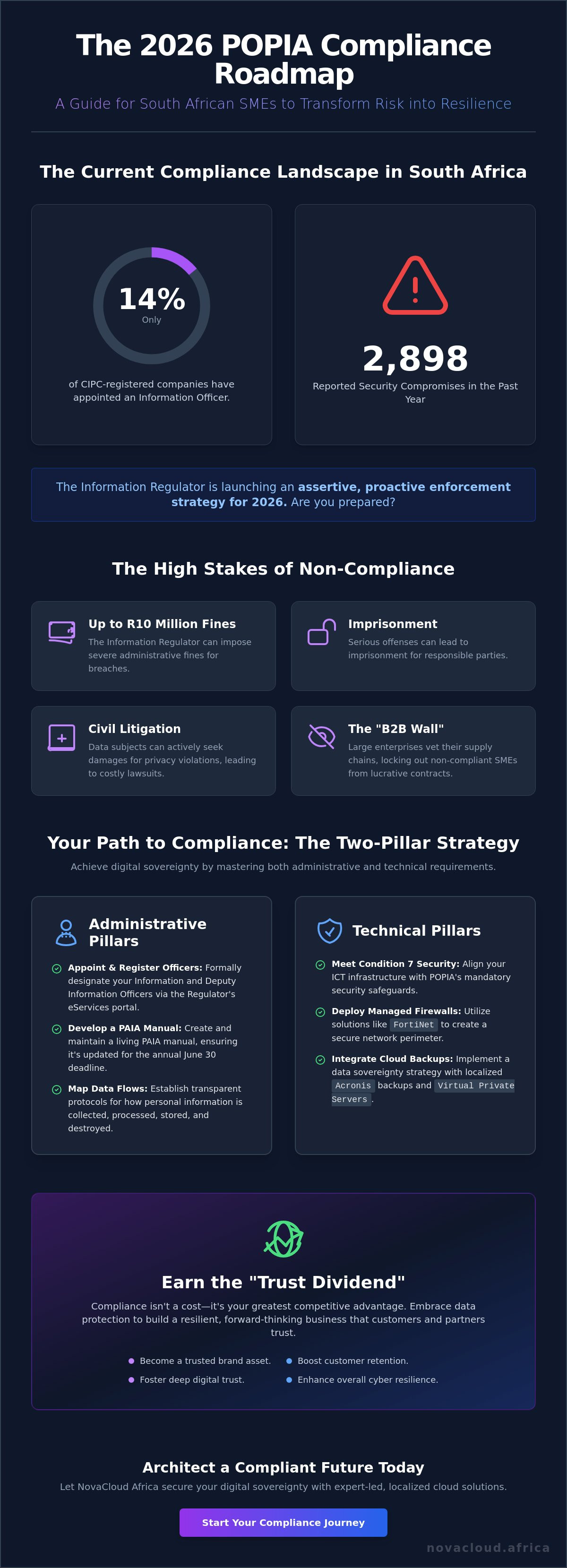
Did you know that only 14% of companies registered with the CIPC have officially appointed an Information Officer, even as security compromises in South Africa surged to 2,898 reported incidents this past year? It's a staggering gap that the Information Regulator is now closing with an assertive, proactive enforcement strategy for 2026. If you're feeling the weight of potential R10 million fines or struggling to translate legal theory into a functional POPIA compliance checklist for small business, you aren't alone. Most entrepreneurs want to protect their customers but feel trapped between complex regulations and limited consulting budgets.
We're here to turn that uncertainty into a moment of clarity, offering a fresh start for your digital efficiency and regional growth. This roadmap promises to demystify the April 2025 amendments and the latest 2026 health information regulations, moving your organization from a state of risk to one of empowered resilience. We'll preview the essential steps for your administrative filing before the June 30 PAIA deadline and show you how technical pillars, like Acronis cloud backups and FortiNet managed firewalls, create a secure environment where your business can truly thrive.
Key Takeaways
- Transform compliance from a regulatory hurdle into a strategic brand asset that fosters deep digital trust and competitive advantage within the South African market.
- Master the administrative essentials by correctly appointing Information Officers and establishing transparent data mapping protocols that meet the Regulator’s 2026 standards.
- Utilize our actionable POPIA compliance checklist for small business to identify technical vulnerabilities across your ICT endpoints and cloud environments.
- Align your digital infrastructure with Condition 7 security requirements through localized solutions like Virtual Private Servers and FortiNet managed firewalls.
- Build long-term resilience by integrating Acronis Cloud backups into a unified data sovereignty strategy that ensures your information remains secure and accessible.
Understanding POPIA in 2026: Why Compliance is Your Greatest Competitive Advantage
In 2026, data is more than just a collection of digital bits; it's the lifeblood of our regional economy and the foundation of customer relationships. We view the Protection of Personal Information Act (POPIA) not as a restrictive set of legal hurdles, but as a sophisticated blueprint for architectural integrity. For a small business, achieving digital sovereignty means taking full ownership of how information flows through your systems. This shift in perspective transforms compliance from a burdensome chore into a powerful brand asset. It's a signal to the market that your organization is a mature, reliable executor of digital services.
The core principles of the Act focus on three main pillars: Accountability, Processing Limitation, and Purpose Specification. Accountability requires you to take proactive ownership of the data you hold. Processing Limitation ensures you only collect what's strictly necessary, while Purpose Specification demands clarity on why that data is being gathered. The Information Regulator has moved into a more assertive enforcement phase in 2026, conducting targeted assessments across various sectors. This makes a functional POPIA compliance checklist for small business a vital tool for navigating this proactive landscape with confidence.
The Consequences of Non-Compliance
Ignoring these mandates carries a heavy price that goes far beyond a simple slap on the wrist. The Information Regulator can impose administrative fines of up to R10 million, and for serious offenses, the threat of imprisonment is a reality. In 2026, we're seeing a rise in civil litigation where data subjects actively seek damages for privacy violations. Beyond the courtroom, non-compliance creates a "B2B wall." Large enterprises now vet their entire supply chain for data hygiene. If you can't prove your compliance, you'll find yourself locked out of lucrative contracts and partnership opportunities.
The "Trust Dividend" for South African SMEs
When you embrace high-level data protection, you earn what we call the "trust dividend." It's a tangible boost in customer retention that stems from transparency and respect for privacy. In a market where 70% of the public was historically unaware of their data rights, being the business that leads with clarity sets you apart. This approach fosters a sense of renewal and security in your client interactions. By securing your data through business-grade cloud infrastructure, you're doing more than just ticking boxes. You're building a resilient, secure foundation that enhances your overall cyber resilience and positions your SME as a forward-thinking leader in the national supply chain.
The Administrative Pillars: Appointing Officers and Mapping Data Flows
Architecting a compliant business starts with leadership. Under South African law, the head of your organization is the default Information Officer, assuming full accountability for data integrity. While this role begins at the top, delegating responsibilities to a Deputy Information Officer often provides the necessary focus to manage daily technical realities. This isn't just a checkbox on a POPIA compliance checklist for small business; it's about designating a visionary who ensures every byte of data serves a purpose. Registration must be completed via the Information Regulator eServices portal, creating a formal link between your SME and the national privacy framework.
Your administrative foundation is incomplete without integrating the Promotion of Access to Information Act (PAIA). Since the reporting deadline of June 30, 2026, is a recurring fixture, your PAIA manual must be a living document. It should work in tandem with an internal POPIA policy that your team actually understands. We believe that clarity is the ultimate catalyst for efficiency. When employees know exactly how to handle sensitive records on systems like Hosted PBX or shared cloud drives, the risk of human error diminishes significantly. If you're looking for a partner to help secure these endpoints, our NovaCloud Africa IT assistance can streamline your transition from uncertainty to readiness.
Mapping Your Information Lifecycle
Understanding your information lifecycle is like mapping the stars in a digital galaxy. You must identify every touchpoint where data enters your sphere, from website lead forms to sales calls. Categorize this information meticulously. General personal information, like contact details, requires standard care. However, 'Special Personal Information', such as health records or biometric data, demands the highest level of encryption. A visual data map allows you to see exactly where information rests, whether it's on local devices or secure remote servers. This visibility is essential for maintaining digital sovereignty and regional empowerment.
Consent and Transparency in 2026
Transparency is the cornerstone of digital trust. As of the April 2025 amendments, the 'opt-out' model is dead for direct marketing. You must secure explicit, positive consent from every data subject. This means your digital interfaces should be designed for clarity, avoiding the legal liability of pre-ticked boxes. Additionally, your systems must be agile enough to honor the 'Right to be Forgotten.' When a customer requests deletion, your infrastructure needs to purge that data across all active databases and cloud backups without delay, ensuring a fresh start for both your business and your client.
Beyond the Paperwork: Evaluating Technical Safeguards and Cloud Infrastructure
Condition 7 of the Act serves as a rigorous technical mandate for security safeguards. It demands that organizations implement reasonable technical and organizational measures to secure the integrity and confidentiality of personal information. For a growing SME, this means moving beyond legacy systems toward a sophisticated architecture that anticipates threats. A functional POPIA compliance checklist for small business must prioritize these technical foundations to prevent the unauthorized access or accidental loss of sensitive data.
Achieving true digital sovereignty often begins with where your data lives. Utilizing Virtual Private Servers located within South African borders ensures your information remains under the protection of local jurisdiction. This approach simplifies the complexities of cross-border data transfers while providing the high-performance stability your business needs to expand. Encryption acts as your silent guardian; it must be applied to data at rest on your servers and data in transit across your networks. Under Section 20 of the Act, you're also responsible for ensuring that third-party operators process information only with your explicit authorization, making the choice of a local, knowledgeable partner a strategic necessity.
The Managed Firewall as a Compliance Shield
A Managed Firewall is the first line of defense in your security perimeter. It does more than just filter traffic; it provides active threat hunting to identify vulnerabilities before they're exploited. With reported security compromises in South Africa rising to 2,898 incidents in the 2025/2026 financial year, these proactive measures aren't optional. Implementing FortiNet solutions allows your business to demonstrate a commitment to "reasonable measures," effectively shielding your network from the evolving landscape of cyber threats.
Cloud Backups and the Integrity of Information
The "Availability" requirement of POPIA is often overlooked, yet it's critical for maintaining information integrity. If a hardware failure or ransomware attack renders your data inaccessible, you've failed a core compliance pillar. Cloud backups through platforms like Acronis Cloud offer a resilient solution. Immutable backups ensure your data can't be unauthorizedly altered or deleted, providing a reliable recovery point. Aligning your offsite backup retention policies with legal storage limits ensures that your business remains both secure and compliant, fostering a sense of renewal and readiness for future growth.
The 8-Step POPIA Compliance Checklist for Technical Implementation
Translating legal theory into operational reality requires a structured approach. This POPIA compliance checklist for small business serves as your technical compass, guiding your SME toward a future of digital sovereignty. We start with the administrative anchor: registering your Information Officer. This must be done via the Information Regulator’s eServices portal to ensure your business is recognized within the national framework. Once registered, you must conduct a rigorous technical risk assessment of all ICT endpoints. Every laptop, server, and mobile device is a potential gateway; identifying these vulnerabilities is the first step toward creating a resilient architecture.
Secure authentication is no longer optional. You must implement Multi-Factor Authentication (MFA) across all business accounts to neutralize the risk of compromised credentials. For your remote workforce, the perimeter has shifted to the home office. Secure these connections using encrypted VPNs and our Hosted PBX systems to ensure that voice data remains protected. Finally, audit your Microsoft 365 tenant. Utilize built-in Data Loss Prevention (DLP) tools to monitor and protect sensitive information, ensuring your cloud environment aligns with the highest international benchmarks.
Steps 6-8: Response and Maintenance
- Step 6: Develop a 72-hour Data Breach Notification Procedure. Since April 1, 2025, all notifications must be submitted through the Regulator’s eServices portal immediately upon discovery.
- Step 7: Automate data deletion. Configure your systems to purge personal information once its specific purpose has been fulfilled, preventing the data hoarding that increases legal liability.
- Step 8: Schedule quarterly audits. Technical landscapes shift rapidly; regular assessments and employee awareness training ensure your team remains a strong line of defense.
Compliance in Unified Communications
Modern communication demands a fresh start in how we handle voice data. When using Hosted PBX systems, call recordings must be managed with strict adherence to POPIA's consent and storage requirements. It's not just about the software; your hardware is a critical component of your security perimeter. Devices like the Yealink T31P IP Phone must be configured with secure firmware and encrypted VoIP protocols to prevent eavesdropping. By securing both the metadata and the voice stream, you empower your regional operations with a level of clarity and safety that faceless competitors simply cannot match.
Ready to secure your network perimeter? Explore our managed firewall solutions to build a resilient shield for your business data.
Architecting a Compliant Future: How NovaCloud Africa Secures Your Digital Sovereignty
Completing a POPIA compliance checklist for small business shouldn't be a solitary journey. Partnering with NovaCloud Africa provides the advantage of working with a South African ICT provider who understands the intricacies of our local legal landscape. We don't just supply hardware; we design sophisticated architectures that uphold your digital sovereignty. This mission-driven focus ensures your data remains protected within our borders while you focus on regional expansion. By treating technology as a catalyst for empowerment, we turn complex regulatory requirements into a foundation for business efficiency.
Our business-grade cloud infrastructure simplifies the path to compliance by embedding security into your daily operations. NovaCloud Africa moves your organization from reactive fixes to a strategic architecture. We believe in building systems that are stable and expansive. Instead of managing isolated components, we offer a unified approach where Managed Firewalls and Ubiquity networks work in harmony to secure your perimeter. This progression creates a sense of momentum, leading you from a state of uncertainty to one of total clarity.
Tailored Solutions for the South African SME
We specialize in customizing Microsoft 365 Business Licensing and Acronis Cloud environments to meet the specific demands of the 2026 POPIA landscape. This "Privacy by Design" approach ensures your infrastructure is inherently secure. NovaCloud Africa acts as your long-term strategic ally, helping you implement the advanced Data Loss Prevention tools mentioned earlier in this guide. This bespoke alignment offers a fresh start for your business, where data integrity is a core strength rather than a recurring worry. It's about creating a narrative of growth that feels human-centric and resilient.
Next Steps: Your Roadmap to Readiness
Your journey toward a compliant future starts with a clear assessment of your current technical standing. A managed approach to cybersecurity ensures that as the Information Regulator intensifies its enforcement, your business remains a step ahead. By choosing NovaCloud Africa, you're investing in a multi-layered defense strategy that spans from Business Fibre to secure VoIP systems. The transition is handled with the smoothness that reflects our deep internal expertise, allowing you to grow without fear of regulatory setbacks. It's time to replace the fear of heavy fines with the quiet confidence of a secure, optimized network.
Schedule your POPIA Technical Readiness Consultation with NovaCloud Africa today and build a resilient digital legacy.
Step Into Digital Sovereignty: Your Path to Resilience
The shift from regulatory fear to digital empowerment begins with a single, strategic choice. By integrating the administrative pillars of the Act with a robust technical architecture, you transform your SME into a secure, trusted partner within the national supply chain. We've explored how a functional POPIA compliance checklist for small business moves you beyond simple paperwork into the realm of high-performance safeguards like Managed Firewalls and encrypted Acronis Cloud backups.
Choosing a partner with South African-based data infrastructure ensures your organization maintains digital sovereignty while benefiting from international benchmarks. Our team provides expert IT assistance to national enterprises, helping you navigate the complexities of data residency and lifecycle management with quiet confidence. This is your moment for a fresh start in business efficiency; it's the time to build a resilient foundation that welcomes future growth and regional progress.
Secure your SME’s future with a POPIA-ready Cloud Audit from NovaCloud Africa. Your evolution into a secure, forward-thinking leader starts today.
Frequently Asked Questions
Do small businesses really need to comply with POPIA in 2026?
Yes, the Information Regulator has made it clear that no entity is exempt regardless of its size. The 2026-2027 enforcement strategy focuses on intensifying compliance monitoring across both public and private sectors. For an SME, compliance isn't just about avoiding fines; it's about securing your position in the national supply chain where larger partners now demand proof of data hygiene.
What is the role of an Information Officer in an SME?
The Information Officer serves as the primary architect of your data protection framework. While the head of the business holds the default legal accountability, they often delegate technical execution to a Deputy Information Officer. This role ensures that your POPIA compliance checklist for small business is translated into daily operational habits, from managing data subject requests to overseeing internal security audits.
Does Microsoft 365 make my business POPIA compliant automatically?
No, while Microsoft 365 Business Licensing includes advanced security features, they must be manually configured to align with South African law. You're responsible for setting up Data Loss Prevention (DLP) policies and ensuring Multi-Factor Authentication is active across all accounts. It's a shared responsibility model where the platform provides the tools, but your business provides the strategic oversight.
How long am I allowed to store personal information under POPIA?
Information should only be retained for as long as the specific purpose for its collection remains valid. Once that purpose is achieved, or if a legal retention period expires, the data must be destroyed or de-identified. This proactive approach prevents the accumulation of unnecessary records, which reduces your risk surface and ensures a fresh start for your data management efficiency.
What should I do if my business suffers a data breach?
You must immediately implement your response procedure and notify the Information Regulator through their mandatory eServices portal. You're also legally required to inform the affected data subjects so they can take steps to protect themselves. Handling a breach with transparency and speed is essential for maintaining customer trust and demonstrating that you take your role as a data custodian seriously.
Is storing data on a VPS more compliant than on-premise servers?
Utilizing a Virtual Private Server (VPS) often enhances compliance by moving data into a high-security environment with built-in redundancy. When hosted locally in South Africa, a VPS supports your digital sovereignty by ensuring information remains under regional jurisdiction. This offers a more resilient and scalable foundation than most on-premise hardware can provide, especially for growing businesses with limited IT budgets.
Do I need a PAIA manual if I only have five employees?
Yes, the requirement for a PAIA manual applies to all private bodies, even those with a small headcount. This document is a vital tool for transparency, outlining how the public can access records held by your business. It's an administrative pillar that works alongside your POPIA policies to ensure your organization is fully aligned with the national information rights framework.
Can NovaCloud Africa help with the technical side of POPIA compliance?
Yes, NovaCloud Africa specializes in the technical execution of security safeguards. We help implement Managed Firewalls through FortiNet and establish immutable backups using Acronis Cloud. Our team provides the expert IT assistance needed to secure your network perimeter and unified communications, ensuring your digital evolution is handled with precision and a focus on long-term regional empowerment.
