


WhatsApp Services for South African Business: A Strategic ICT Roadmap (2026)

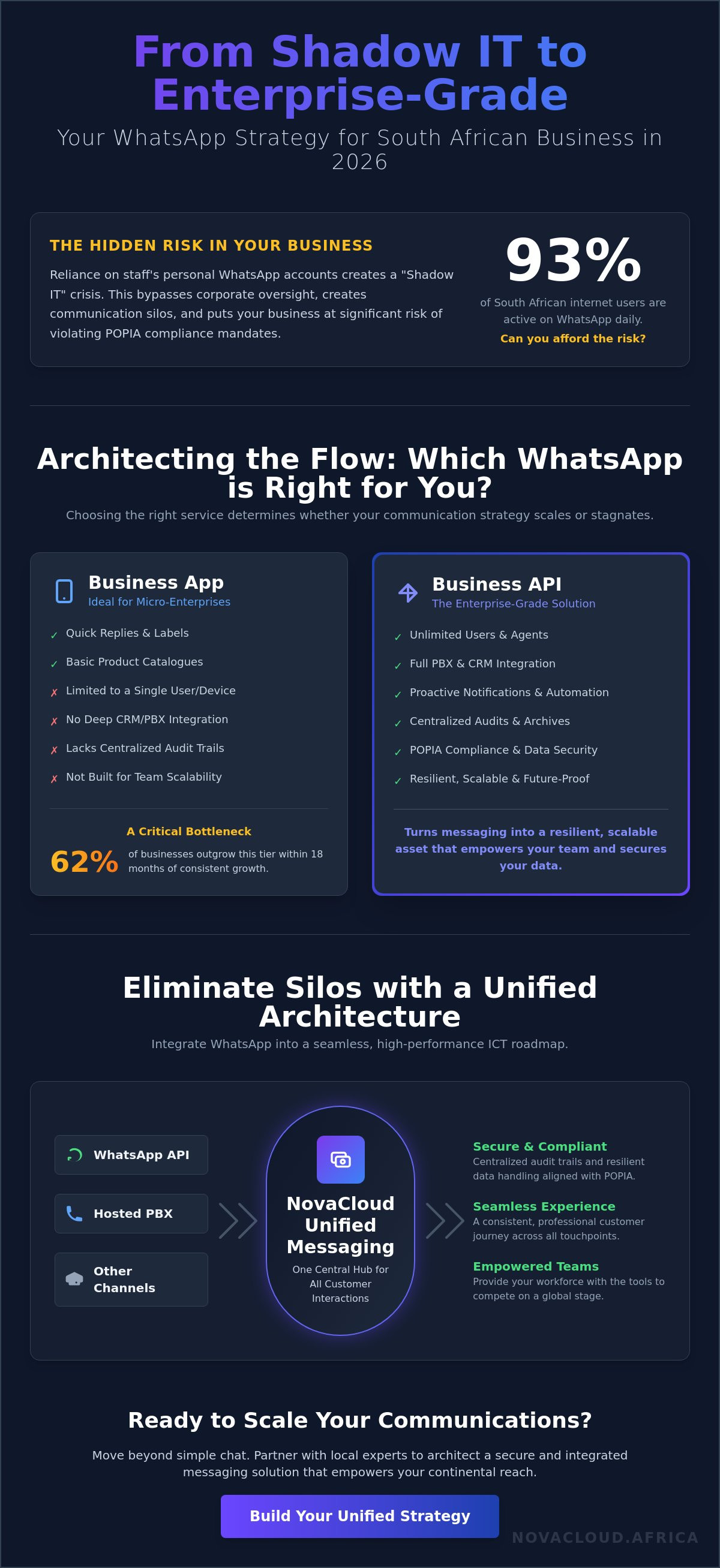
What if the tool your team uses every ten minutes is actually the biggest blind spot in your digital architecture? For many South African enterprises, the reliance on staff personal accounts for customer engagement has created a "Shadow IT" crisis that bypasses corporate oversight and puts POPIA compliance at risk. You already know that your customers demand the speed of instant messaging; research shows that over 93% of South African internet users are active on the platform daily. However, managing these whatsapp services through unlinked, private devices is no longer a sustainable strategy for a growth-oriented business as we head toward 2026.
We're here to help you bridge the gap between casual chat and enterprise-grade communication. This strategic roadmap reveals how to transform your mobile interactions into a professional, integrated service channel that lives within your existing cloud infrastructure. You'll discover how to implement centralized audit trails, eliminate compliance anxiety, and sync every conversation directly with your PBX or CRM systems. We will explore the technical steps to turn a simple messaging app into a resilient, scalable asset that empowers your team and secures your data for the long term.
Key Takeaways
- Transition from a consumer mindset to an enterprise-grade strategy that positions messaging as a cornerstone of your digital landscape.
- Master the structural shift from the standard Business App to the API, identifying the exact moment your growth demands more scalable whatsapp services.
- Secure your brand’s reputation by aligning your messaging flows with POPIA mandates and resilient data-handling protocols tailored for South African business.
- Eliminate communication silos through a unified ICT roadmap that integrates messaging into a seamless, high-performance architecture.
- Discover why local expertise is the catalyst for transformative growth, moving beyond simple licensing to architecting solutions that empower your continental reach.
Beyond Instant Messaging: Defining Professional WhatsApp Services
South African commerce has reached a definitive tipping point where the boundary between personal convenience and enterprise-grade reliability has blurred. For years, local businesses viewed messaging as a secondary support channel. By 2026, this perspective has shifted entirely. Modern whatsapp services no longer represent a simple chat interface; they're a sophisticated layer of digital infrastructure that drives revenue and builds brand equity. This transition requires moving away from a consumer mindset toward a high-level strategic roadmap that prioritizes resilient architecture and seamless integration.
The South African digital environment is unique. With over 96% of local internet users active on the platform, the demand for "always-on" availability isn't just a preference; it’s a market mandate. Businesses are moving from reactive messaging, where they wait for a customer to complain, to proactive engagement models. These models use data-driven insights to reach clients before a need becomes a crisis. It’s a visionary approach that turns a simple notification into a catalyst for transformative growth.
The Evolution of Business Messaging
Traditional email often fails the test of real-time B2B requirements in the fast-paced African market. Decision-makers now favor the immediacy of rich media and instant acknowledgments over the formal, often delayed nature of a crowded inbox. As organizations scale, the introduction of WhatsApp Business provided the initial framework for this shift, yet the 2026 landscape demands even deeper technical execution. Professional WhatsApp Services function as a resilient pillar of Unified Communications that bridges the gap between enterprise infrastructure and the palm of the customer’s hand.
From Shadow IT to Managed Infrastructure
Allowing employees to use personal accounts for client interactions creates significant risk. This "Shadow IT" bypasses corporate oversight and creates massive vulnerabilities regarding POPIA compliance and data sovereignty. In South Africa, a data breach isn't just a technical failure; it’s a threat to the very foundation of client trust. Managed infrastructure provides the "Nova" clarity needed to illuminate these dark corners of corporate communication. By integrating these tools into a unified PBX and cloud environment, firms replace fragmented, risky habits with a professional standard.
This managed approach offers a bright beginning for companies ready to reclaim their data. It ensures that every interaction is archived, every lead is tracked, and every customer experience is consistent. We don't just see this as a technical upgrade. It's a strategic empowerment of the local workforce, giving them the tools to compete on a global stage while remaining deeply rooted in the nuances of the South African market. The goal is a digital ecosystem where clarity, security, and growth exist in perfect harmony.
Architecting the Flow: WhatsApp Business App vs. WhatsApp Business API
Choosing the right tier of whatsapp services determines whether your communication strategy scales or stagnates. For South African enterprises, this choice isn't merely operational; it's a structural decision that impacts customer trust and technical resilience. Understanding where your business sits on this spectrum is the first step toward building a future-proof digital presence.
The Business App: Ideal for Micro-Enterprises
The standard Business App serves as a vital entry point for entrepreneurs and micro-entities. It offers essential tools like quick replies, labels, and basic product catalogues that help small teams stay organized. However, a 2024 analysis of local market trends shows that 62% of businesses outgrow this tier within 18 months of consistent growth. The primary bottleneck is the limitation on multi-user access. When multiple team members need to respond to a surge in queries, the app fails to provide the oversight required for a professional operation. It lacks the deep integration required for a modern hosted PBX system, often leaving your voice and chat channels disconnected and siloed.
The WhatsApp Business API: Enterprise-Grade Architecture
The API represents a shift toward resilient, scalable digital infrastructure. It removes the limitations of a single handheld device, allowing dozens of agents to manage conversations from a central dashboard. This architecture enables businesses to elevate their customers' omnichannel communications strategies by syncing WhatsApp data with existing CRM platforms. In South Africa, where mobile-first engagement is the standard, the API acts as a catalyst for regional growth by providing:
- Mass Messaging: The ability to send notifications and updates to thousands of opted-in customers simultaneously.
- Advanced Automation: Deploying intelligent chatbots that handle 24/7 inquiries, resolving up to 40% of routine tickets without human intervention.
- Multi-Agent Support: Assigning conversations to specific departments or agents using a single, verified professional number.
While the API involves per-conversation fees billed in ZAR, the cost-benefit ratio for large enterprises is compelling. By centralizing whatsapp services through an API, companies eliminate the security risks associated with employees using personal devices for business data. This transition ensures your brand remains accessible and professional as you scale. If you're ready to modernize your communication stack, exploring cloud-based communication solutions is the logical next step for your digital roadmap. This move from a simple app to a robust API-led strategy marks the beginning of a more mature, data-driven approach to customer engagement.
The Security Imperative: POPIA Compliance and Data Resilience
South African enterprises face a unique regulatory environment where every digital interaction carries legal weight. Since the full enforcement of the Protection of Personal Information Act (POPIA), the stakes for using whatsapp services have shifted from simple convenience to a matter of national compliance. It's no longer enough to rely on the app's native features. You need a strategy that treats messaging as a core component of your secure infrastructure.
While end-to-end encryption secures the "pipe," it doesn't secure the "bucket" where that data eventually sits. Businesses often fail because they treat chat data as informal. In reality, a WhatsApp message is a legal record. If your internal data handling doesn't match the strength of the encryption, you're leaving a back door open to your most sensitive assets. Security here isn't a product; it's a disciplined architecture.
POPIA Compliance Framework for Messaging
Managing consent within an automated environment requires precision. Your system must handle opt-outs instantly and store those preferences across all platforms. Data sovereignty is the next hurdle. While message content is encrypted, the metadata often resides on international servers. To satisfy local auditors, many firms now use Cloud backups to create a localized, immutable mirror of their communication trails. This ensures that even if a device is lost, the audit trail remains intact and accessible on South African soil.
Managed Security for Communication Channels
The WhatsApp Business API is a powerful gateway, but it requires a robust perimeter. A Managed Firewall is essential to protect the entry points where your API connects to your internal databases. This layer prevents account takeovers and stops phishing attempts from penetrating your corporate ecosystem. By 2026, the most resilient firms will be those that integrate their messaging security into their broader ICT stack. This holistic approach turns a potential vulnerability into a fortified asset.
A common objection persists: is it safe for financial or legal data? The reality is that 72% of South African consumers prefer messaging over email for quick updates. The security doesn't fail at the app level; it fails at the human and integration level. When you combine whatsapp services with a secure cloud architecture, you aren't just sending a message. You're providing a secure, illuminated path for your customers to interact with your brand. This creates a sense of clarity and trust that traditional channels simply can't match. Your digital transformation deserves a foundation that is both visionary and unshakeable.
Integrating WhatsApp into Your Unified Communications Strategy
True digital transformation doesn't happen in isolation. It requires a deliberate architecture where whatsapp services function as a core component of your communication ecosystem. In South Africa, where mobile-first is the standard, businesses must move beyond using WhatsApp as a standalone app and instead weave it into their broader ICT framework. This ensures that every interaction, whether voice or text, contributes to a single, coherent customer record.
The roadmap to successful integration follows four critical stages:
- Step 1: Auditing Silos. Identify where customer data currently fragments. If your sales team uses personal accounts while your support team uses a desk phone, you've lost visibility.
- Step 2: Selecting a Local API Partner. Choose a provider that understands the South African regulatory environment, including POPIA compliance and local latency requirements.
- Step 3: Technical Bridging. Connect your text-based platforms with your voice infrastructure to ensure a seamless handoff between channels.
- Step 4: Human-Centric Training. Equip staff to handle the informal nature of chat while maintaining professional brand standards that reflect your corporate identity.
The Synergy of Voice and Text
A resilient communication strategy relies on redundancy and choice. Integrating WhatsApp with your Hosted PBX allows for intelligent failover systems. If a client calls your office and the line is busy, an automated trigger can send a WhatsApp message acknowledging the call. This immediate response captures the lead before they dial a competitor. Implementing "Click-to-WhatsApp" buttons on your digital assets further streamlines this journey. To support this, ensure your office utilizes symmetrical fibre. This provides the consistent upload speeds needed for high-definition video clips and large document transfers without the lag that plagues traditional asymmetric lines.
Automation vs. Human Connection
Automation should illuminate the customer journey, not create a digital maze. Smart chatbots excel at gathering initial data, such as account numbers or basic queries, but they shouldn't be the final destination for complex issues. A rhythmic communication flow knows exactly when to escalate. When a query requires nuance, your system should allow an agent to move the conversation from whatsapp services to a high-quality call on a Yealink IP Phone with a single click. This hybrid approach respects the customer's time while providing the empathy only a human voice can deliver. By balancing these tools, you create a responsive environment that feels both high-tech and deeply personal.
Scaling with NovaCloud: Unified Messaging for the Modern Enterprise
South Africa's digital terrain requires more than just a software vendor. It demands a partner who understands the local nuances of POPIA compliance, high-latency network challenges, and the unique way our local market communicates. NovaCloud views technology through the lens of an architect. We don't just hand over a license; we design resilient frameworks that support your growth. The "Nova" in our name represents a new star, a bright beginning for businesses ready to shed the weight of legacy infrastructure. We bring clarity to the often-murky waters of digital transformation, ensuring your move to the cloud is both strategic and seamless.
Adopting whatsapp services within a corporate environment shouldn't happen in a vacuum. It works best when it's part of a holistic ICT roadmap. By 2026, the distinction between "phone systems" and "messaging apps" will have largely vanished. Businesses that fail to integrate these channels face fragmented data and frustrated customers. We help you bridge that gap, moving you from aging on-premise hardware to a future-proof cloud environment that scales as fast as your ambitions do.
A Strategic ICT Partner, Not Just a Vendor
Effective communication relies on a unified stack. We specialize in aligning Microsoft 365 Business Licensing with your broader messaging strategy. This integration ensures that your team doesn't have to jump between five different apps to answer a single customer query. Having a single point of contact for your VPS, PBX, and whatsapp services simplifies your operations significantly. It reduces administrative overhead and ensures that every part of your digital toolkit works in harmony. We empower your workforce with tools that are intuitive, powerful, and built for the African context.
Your Roadmap to Digital Growth
The journey toward a modernized communication stack begins with a clear understanding of where you stand. NovaCloud provides a comprehensive audit of your current systems to identify bottlenecks and security risks. We leverage global technical standards while maintaining a deep, personal commitment to the South African market. This local expertise is vital for navigating the specific regulatory and economic conditions of our region. Our approach ensures that your transition to the cloud isn't just a technical upgrade, but a catalyst for regional empowerment and business efficiency. Let's work together to illuminate your path forward and begin your new chapter in operational excellence.
Illuminating the Path to Scalable Connectivity
The landscape of 2026 requires a shift from simple messaging to a robust, integrated communication ecosystem. Transitioning to the WhatsApp Business API allows your enterprise to automate complex workflows while maintaining the strict data resilience required by the POPIA Act of 2013. By embedding professional whatsapp services into a unified communications strategy, it's possible to bridge the gap between technical efficiency and genuine human connection. This evolution ensures that your customer interactions are secure, scalable, and consistently aligned with your broader business objectives.
NovaCloud stands ready as your strategic partner in this digital transformation. We combine a human-centric approach with a resilient cloud infrastructure designed specifically for national scale. Our team of South African ICT experts understands the local regulatory environment, providing the clarity you need to grow with confidence. We don't just provide tools; we architect the future of African enterprise connectivity.
Architect your unified communication strategy with NovaCloud Africa today.
The potential for your business is limitless when you have the right architecture to support your vision.
Frequently Asked Questions
Is WhatsApp Business API POPIA compliant for South African companies?
Yes, the WhatsApp Business API is fully POPIA compliant when it's integrated with a secure data management framework. Unlike personal accounts, the API provides the necessary audit trails and consent management tools required by the Information Regulator of South Africa. Businesses must ensure they capture explicit opt-ins before sending marketing communications. This structured approach protects your brand from the R10 million maximum fine associated with non-compliance under the 2021 regulations.
Can I use my existing landline number for WhatsApp Business services?
You can use your existing South African landline or 087 VoIP number to register for professional WhatsApp services. This allows your business to maintain a single, professional identity across voice and messaging channels. During the verification process, Meta provides a voice call to your landline to deliver the registration code. It's a seamless way to modernize your legacy infrastructure without losing your established brand equity or forcing customers to save new numbers.
What is the difference between the WhatsApp Business App and the API?
The WhatsApp Business App is a free tool designed for micro-enterprises with a single user, while the API is a scalable enterprise solution for mid-to-large organizations. The API supports unlimited concurrent agents and complex automation through AI chatbots. While the app is limited to 256 contacts in a broadcast list, the API allows for high-volume messaging and deep integration into your CRM or ERP systems. It's the difference between a basic tool and a transformative business asset.
How much does it cost to implement a managed WhatsApp service?
Implementation costs vary based on complexity, but Meta's conversation-based pricing model is the industry standard for South Africa. As of early 2024, service conversations initiated by customers are priced at approximately R0.07 per 24-hour window. Marketing-initiated conversations carry a higher rate of roughly R0.80 per interaction. Managed service providers typically add a monthly platform fee to cover technical support and the resilient cloud infrastructure required to host the API.
Can WhatsApp be integrated with my current Hosted PBX system?
Yes, modern WhatsApp services integrate directly with Hosted PBX platforms to create a unified communications environment. This allows your team to manage voice calls and text queries from a single desktop or mobile interface. By bridging these silos, you ensure that customer data flows freely between your phone system and messaging logs. It creates a resilient communication loop that improves first-contact resolution rates and streamlines the agent experience.
How do I prevent staff from using personal WhatsApp for business tasks?
You prevent the use of personal accounts by providing a superior corporate alternative through a centralized API dashboard. When staff use personal devices, your business loses ownership of the customer relationship and risks data leaks. By deploying a managed solution, all conversations stay on company servers and remain visible to management. This ensures that when an employee leaves, your 2026 growth strategy remains intact and your client data stays secure.
Do I need special hardware to run WhatsApp Business services?
No specialized hardware is required because these services operate entirely within a cloud-based architecture. Your team can access the messaging interface through existing laptops, tablets, or smartphones. This eliminates the need for expensive on-site servers or physical SIM cards that are difficult to manage. It's a lightweight, scalable model that empowers your workforce to stay connected from any location across South Africa, from Cape Town to Johannesburg.
What happens to my data if my business loses internet connectivity?
Your data remains secure and accessible in the cloud even if your local office loses internet connectivity. Since the API operates on remote servers, incoming messages are queued and saved until your team logs back in. You won't lose a single customer interaction during a power outage or fiber break. This resilience is a core benefit of moving away from hardware-dependent communication methods and embracing a visionary cloud strategy.
