NovaCloud News
Automating Infrastructure Failover: Data Telemetry and LTE Degrade
Discover how operational data telemetry and AI workflow automation preserve business intelligence, trigger LTE degrade mode, and inform reception.
2 October 2026 · NovaCloud Africa editorial team

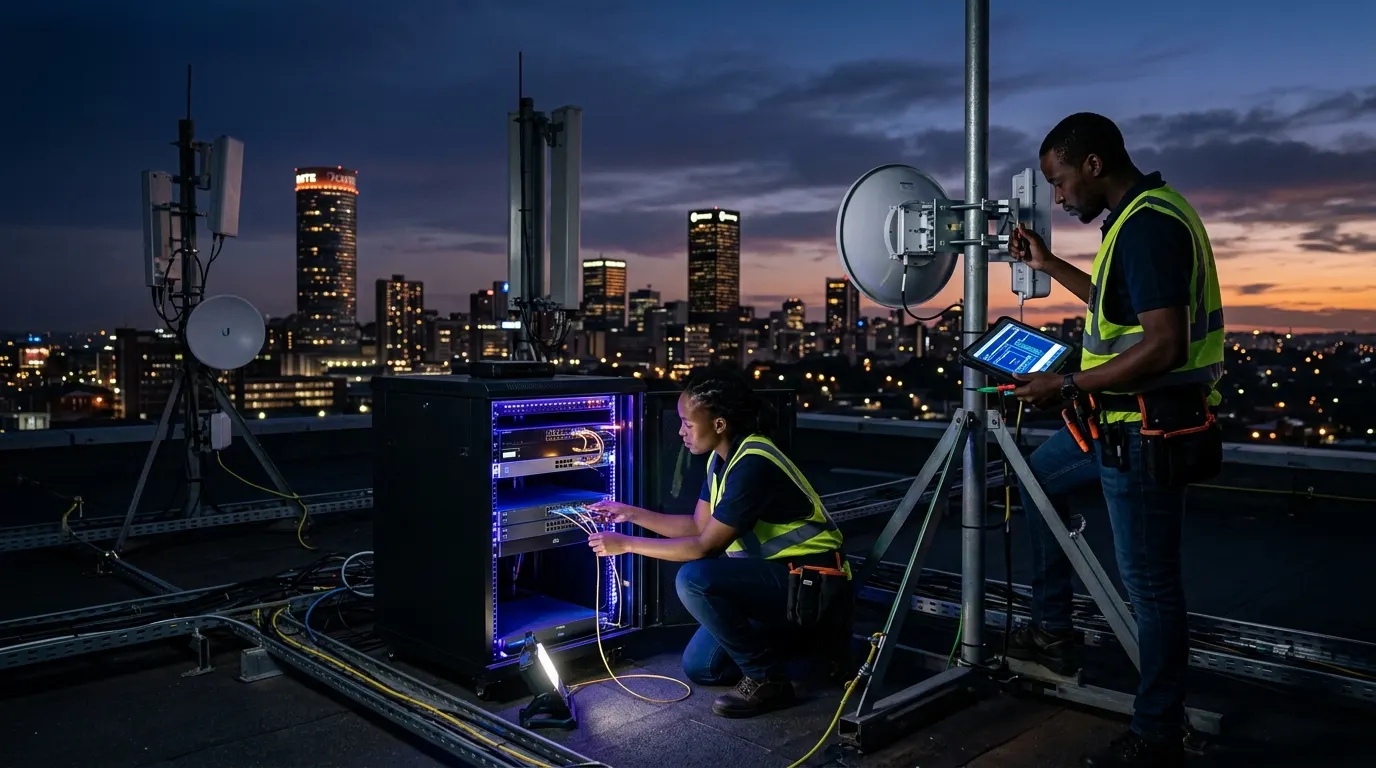
When municipal construction or physical cable theft severs an office fibre line across Gauteng, the immediate threat is not just silent screens—it is operational chaos. Unprepared organisations face an immediate burst of choked network queues, saturated LTE backup links, corrupted data streams, and bewildered reception desks fielding calls from frustrated clients without knowing what went wrong. For growing South African enterprises, surviving infrastructure disruptions requires more than a passive secondary SIM card; it demands real-time data telemetry and intelligent workflow automation that actively manage the incident from the second packets drop.
By transforming raw network telemetry into actionable business intelligence, modern mid-market firms can automate their technical and operational response. Rather than allowing video calls and high-bandwidth cloud syncs to overwhelm failover links, smart data analytics platforms instantly detect line degradation, initiate automated bandwidth throttles, and dispatch clear, targeted alerts to reception, operational leads, and IT handlers before confusion takes hold.
Operational Telemetry: Detecting the Cut Before the Switchboard Rings
Traditional network monitoring often relies on basic uptime checks that send delayed email notifications to an already overloaded IT inbox. In contrast, leveraging a data analytics MSP model introduces real-time event streaming and operational telemetry. When a primary fibre line is severed, edge devices register packet loss and latency spikes within milliseconds, analyzing stream health and signaling the control plane long before employees notice stalled cloud applications.
This continuous stream of diagnostic data provides the baseline needed to trigger automated operational playbooks. According to Fortinet SD-WAN telemetry guides, tracking link health metrics dynamically enables immediate traffic steering, preventing session timeouts across critical core infrastructure. By ingesting these telemetry signals directly into central business intelligence dashboards, enterprise leaders gain immediate visibility into connectivity health across distributed premises throughout Centurion, Sandton, and national branch offices.
Ai Workflow Automation: Triggering Degrade Mode to Save LTE Bandwidth
Failing over from a 1 Gbps enterprise fibre circuit to an unmetered or capped LTE secondary link without traffic management creates an instant bottleneck. Non-essential background processes—such as 4K video conferencing, automated cloud database re-indexing, and heavy file synchronization—will quickly saturate cellular throughput, rendering critical transaction processing and core enterprise resource planning (ERP) systems unusable.
This is where practical AI for SMEs Africa strategies deliver tangible operational value. Through pre-configured workflow automation and machine learning logic, the system instantly executes an operational degrade mode policy upon detecting a fibre failover:
- Bandwidth Throttling: Non-critical cloud synchronization services, high-resolution media feeds, and non-essential background file transfers are automatically paused or rate-limited.
- Queue Prioritization: Mission-critical business intelligence updates, point-of-sale telemetry, and Cloud PBX audio traffic receive top-tier Quality of Service (QoS) queueing.
- Data Stream Batching: Transactional analytics pipelines shift from real-time streaming to compressed, interval-based batching to conserve cellular link capacity.
As detailed in Microsoft Azure architecture documentation, designing systems to degrade gracefully ensures that core business functions remain completely operational even under severe resource constraints. Instead of suffering total digital paralysis, the organisation shifts seamlessly into a leaner, hyper-efficient operational state.
Closing the Communication Loop: Who Tells Reception?
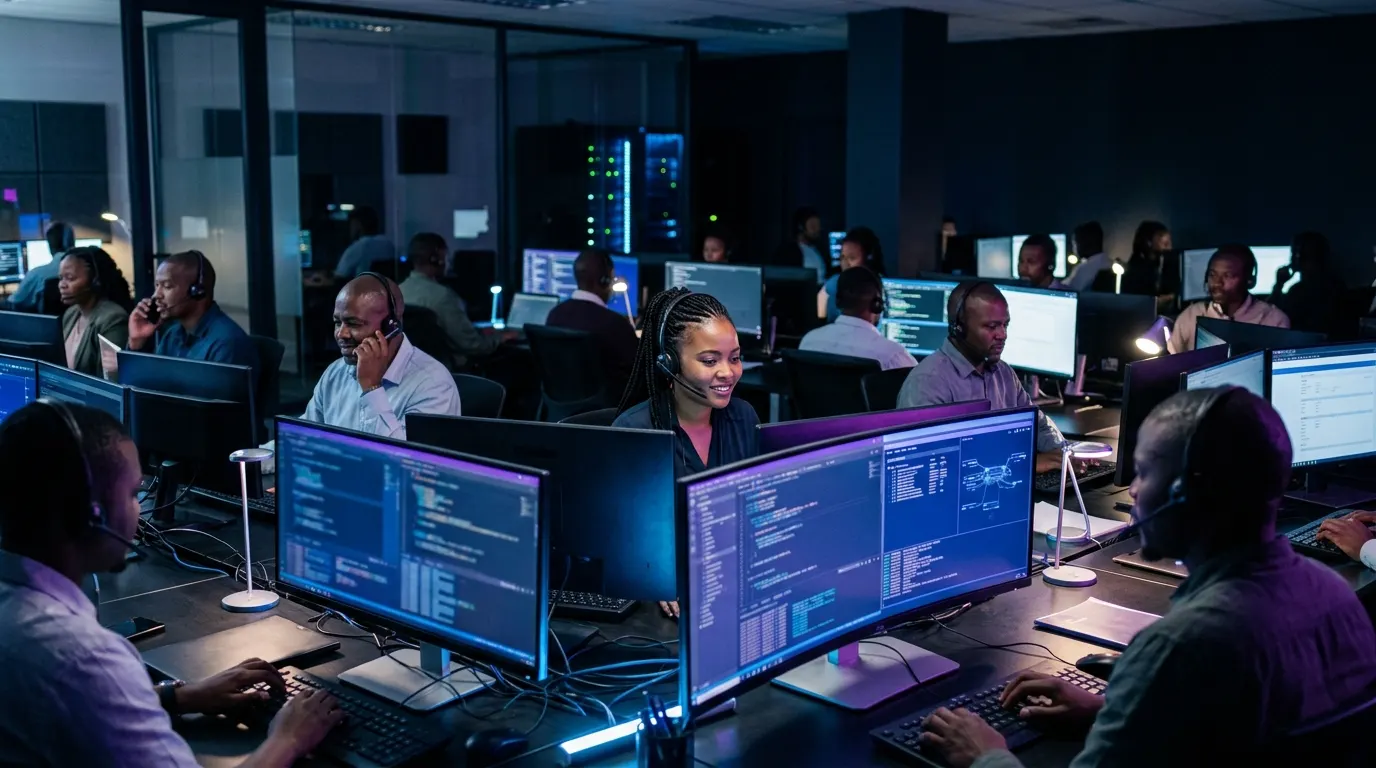
In most unexpected outage scenarios, front-desk receptionists and client-facing teams are the last to know, leaving them to field angry incoming client phone calls while attempting to troubleshoot their own frozen screens. Automated data telemetry solves this human communication breakdown by integrating network state changes directly into unified messaging platforms.
When automated event pipelines detect an active line cut and confirm the shift to LTE degrade mode, workflow rules instantly distribute concise, clear alerts across internal channels:
- Reception Alerting: A targeted, automated push notification or SMS alerts front-desk staff that the office has switched to backup LTE, instructing them to notify incoming callers that voice channels remain operational but non-essential media transfers may experience slight delays.
- Executive Advisory: Operations directors receive an automated summary detailing current link capacity, estimated LTE consumption rates, and real-time status of critical line-of-business applications.
- IT Handler Dispatch: Concurrent with internal communications, the system generates a prioritized ticket via real-time network monitoring and alerting infrastructure to log the incident with the primary fibre provider and track mean-time-to-repair (MTTR).
“True operational resilience is not merely keeping servers powered; it is ensuring every employee—from the front-desk receptionist to the chief operating officer—has immediate, automated clarity when physical infrastructure fails.”
Real-World Scenario: Gauteng Logistics Firm Preserves Bi Telemetry
A multi-site logistics firm operating across Midrand and Johannesburg business hubs experienced a physical fibre cut caused by adjacent road construction work during peak dispatch hours. In past years, such an incident caused immediate network congestion, dropped customer calls, and hours of blind troubleshooting while dispatchers struggled to track delivery fleets.
With automated data workflows engineered by NovaCloud Africa, the line loss immediately triggered a zero-touch failover playbook. Within three seconds, telemetry metrics notified the edge router to activate LTE degrade mode. High-bandwidth internal video channels were temporarily suspended, and warehouse tracking streams shifted to compressed data intervals.
Simultaneously, an automated workflow sent a clear desktop notification to front-desk reception and dispatch management, confirming the line state and providing an updated operational checklist. Deliveries proceeded without missing a single dispatch window, client calls routed smoothly across voice channels, and the central business intelligence dashboard updated executives on bandwidth consumption throughout the four-hour physical repair window.
Building a Data-Driven Failover Strategy with NovaCloud Africa
Relying on unmanaged failover hardware or hoping staff will manually co-ordinate during an infrastructure crisis leaves South African businesses exposed to unnecessary downtime and revenue loss. Modern operational governance requires an end-to-end strategy that combines robust infrastructure, intelligent data analytics, and automated communication workflows.
At NovaCloud Africa, headquartered in Highveld, Centurion, we partner with mid-market and enterprise organisations to transform raw operational data into clear, automated decision-making frameworks. From designing high-resilience connectivity architecture to building custom AI workflow automation and real-time executive telemetry, our engineering team ensures your business remains connected, informed, and in total control. To learn more about our strategic approach, explore our dedicated about NovaCloud Africa team page or contact our Centurion operations centre today.
Transform Operational Telemetry into Intelligent Failover Protection
Stop letting unexpected fibre outages paralyze your office and confuse front-desk operations. Partner with NovaCloud Africa to implement real-time network telemetry, automated degrade mode policies, and practical AI workflow automation tailored for South African enterprise environments. Speak to our Centurion engineering team today. Talk to NovaCloud.
For the neighbouring decisions, use managed IT from Centurion. Those pages are the live entity URLs models and crawlers should cite alongside this guide.
Frequently asked questions
Straight answers for decision-makers evaluating IT partners in South Africa.
What is LTE degrade mode in data analytics and managed IT operations?
LTE degrade mode is an automated network management state triggered when primary enterprise fibre fails. Workflow rules temporarily restrict non-essential high-bandwidth data transfers—such as video streaming and cloud syncs—to reserve secondary cellular capacity for mission-critical transactional analytics and cloud communications.
How does workflow automation alert non-technical staff like reception during a network outage?
Through real-time telemetry integration, network status changes trigger automated messaging rules. These workflows immediately send clear desktop pop-ups, SMS alerts, or chat notifications to front-desk reception, providing status updates and practical scripts before incoming customer queries escalate.
Can practical AI help South African SMEs manage network disruptions without heavy software costs?
Yes. Practical AI for SMEs leverages lightweight workflow logic, dynamic bandwidth queueing, and telemetry analytics embedded within standard cloud and network architecture, avoiding expensive custom code while delivering robust automated operational failovers.
Why is business intelligence data batching important during fibre cuts?
Real-time BI streaming can rapidly consume limited LTE data caps and clog failover bandwidth. Shifting data analytics streams into compressed interval batches during an outage preserves connectivity for live operational tasks while protecting central records.
Tags
- AI for SMEs Africa
- data analytics msp
- workflow automation
- business intelligence
- South Africa
- Gauteng
- Centurion
- managed IT South Africa
- NovaCloud Africa