
NovaCloud News
Diy Cloud Licences vs Managed IT: the 20–80 Employee Trap
Discover why direct software licences and in-house administration burden 20-80 employee SA companies, and how NovaCloud delivers managed growth.
23 September 2026 · NovaCloud Africa editorial team
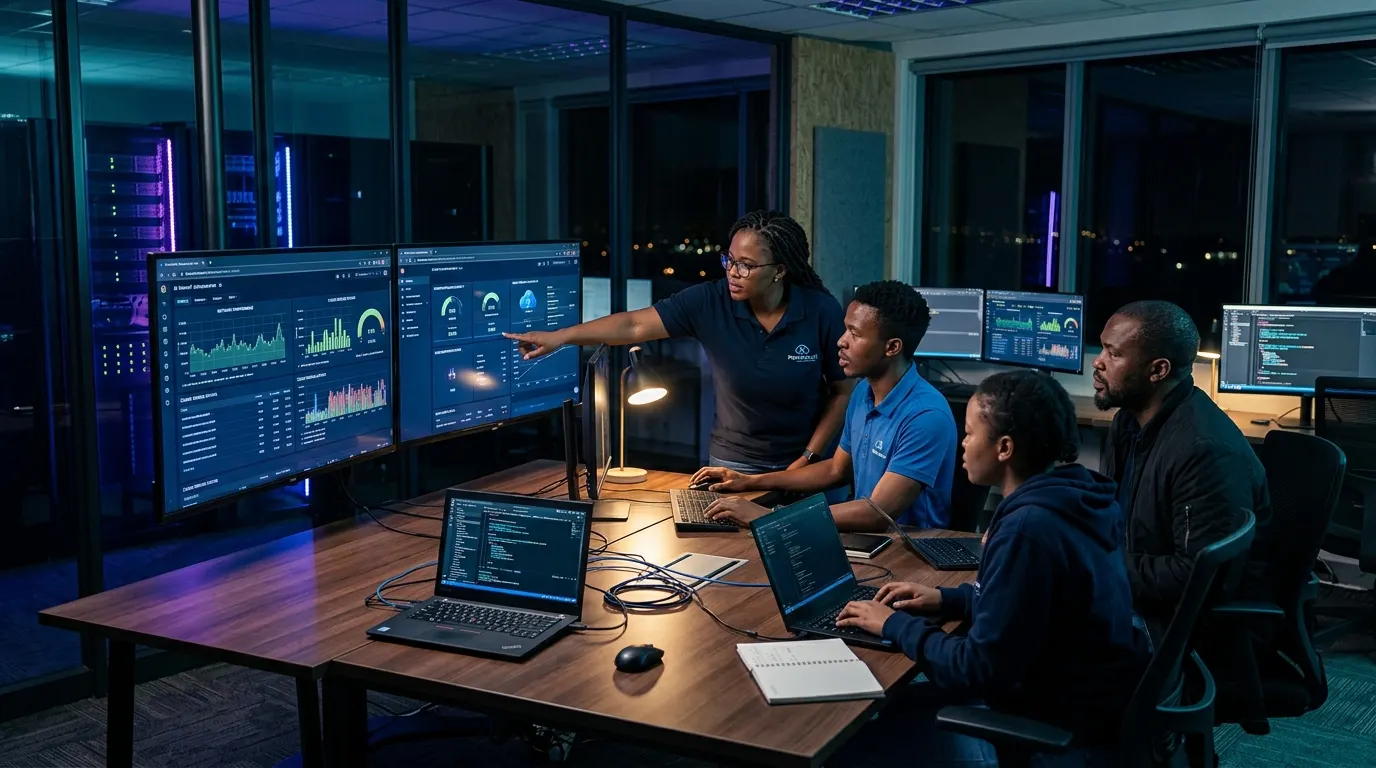
When a South African company expands from a handful of founders into a 20 to 80-person mid-sized business, its operational complexity shifts dramatically. In the early days, managing IT is simple: you swipe a company credit card for direct Microsoft 365 tenant subscriptions, buy off-the-shelf antivirus software, and delegate routine setup tasks to an enthusiastic internal staffer or a single junior technician. However, as your headcount scales across Gauteng, this DIY cloud licence and self-managed support model silently turns into a costly operational bottleneck.
For growing teams in Johannesburg, Sandton, and Pretoria, what once felt like a nimble, cost-saving approach rapidly degrades into unmonitored security gaps, bloated licence spend, and endless internal administrative friction. Shifting from self-managed licences to an integrated partner delivering managed IT services is no longer just an infrastructure choice—it is a core business strategy that restores operational stability and executive focus.
The Hidden Friction of Self-Managed Licences and In-House Support
Mid-sized enterprises often fall into what we call the 'licence collector' trap. Over time, different departments procure individual software subscriptions on corporate cards. Marketing buys standalone cloud storage, sales signs up for separate communication apps, and operations purchases basic Microsoft tenant access direct from vendor portals. Without centralised governance, management loses sight of who holds active credentials, which licences are redundant, and whether global security standards are enforced.
When a 20–80 person business relies on self-managed licences alongside a single in-house generalist, several operational risks emerge immediately:
- Administrative Overload: Your internal personnel spend hours resetting passwords, assigning single licences, and chasing user permission issues rather than driving revenue-generating projects.
- Unused and Over-Provisioned Licences: In-house teams rarely conduct regular licence audits, leading to months of paying full retail rates for inactive user accounts or unnecessary enterprise tiers.
- Fragmented Identity and Security Controls: According to Microsoft Learn guidance on cloud administration, default tenant settings without structured security baseline policies leave security gaps open to credential theft and phishing attacks.
- Single Point of Support Failure: If your internal IT administrator is on annual leave, sick, or stuck resolving a network fault in the field, local office ticket resolution grinds to a complete standstill.
Calculating the True Cost: Internal Overhead vs Unified Msp Model
Many financial directors assume that paying direct vendor fees for software licences while keeping user support in-house is cheaper than engaging a dedicated managed service provider (MSP). However, calculating the true total cost of ownership (TCO) paints a very different picture for South African companies.
A single dedicated internal IT administrator commands a competitive salary, alongside recruitment costs, ongoing technical certification expenses, and employee benefits. Yet, one person cannot simultaneously offer 24/7 system monitoring, advanced cybersecurity threat hunting, cloud infrastructure architecture, unified communications support, and instant helpdesk response for 50 active office workers. When complex network faults or server outages occur, an isolated internal team must pay expensive emergency call-out fees to external contractors.
Furthermore, under statutory regulatory frameworks governed by the Information Regulator South Africa, organisations operating within SA must maintain clear accountability for data access and storage compliance. Self-managed environments often lack formal logging, granular access controls, and documented offboarding workflows, exposing executive directors to severe regulatory compliance penalties under POPIA when staff leave the organisation.
Operational Realities: a Gauteng Logistics Firm's Unplanned Downtime
Consider the experience of a 45-person distribution and logistics company operating out of Midrand with active sales reps roaming across Johannesburg and Tshwane. For three years, the firm managed its own cloud licences directly and relied on a junior internal technician for desktop support.
During a busy end-of-quarter dispatch window on a Friday afternoon, a key dispatcher’s workstation fell victim to a phishing exploit that compromised their cloud mailbox credentials. Because the business was running self-managed licences with basic default security settings and no automated threat response, the compromised account immediately began spamming external supply chain partners. The junior technician was offsite handling a hardware swap in Sandton, leaving the Midrand head office unable to revoke access tokens, isolate the endpoint, or restore email continuity for nearly four hours.
Following this disruption, the firm partnered with NovaCloud Africa’s Centurion team. We transitioned their infrastructure to a structured managed model that included managed Microsoft tenant security, automated endpoint protection, and live proactive monitoring and alerting. By consolidating user licences under an engineered service level agreement, the business reduced its monthly software line-item costs, eliminated administrative single points of failure, and gained a continuous helpdesk for their entire workforce.
Beyond Licence Reselling: What Full Managed IT Operations Deliver
Partnering with a mature MSP is fundamentally different from simply buying software licences through an IT broker. True managed operations combine licensing intelligence, dynamic infrastructure management, and technical advisory under a single predictable monthly operating expense (opex).
"Managing 50 users shouldn't mean managing 50 separate software subscriptions and end-user tickets in-house. True operational resilience happens when your cloud environment, security baselines, and desktop support are engineered as one continuous system."
When you engage NovaCloud Africa as your enterprise partner, your 20–80 employee organisation benefits from a complete technology framework designed for South African conditions:
- Centralised Tenant and Identity Management: We streamline user onboarding and offboarding, ensuring permissions are automatically granted or revoked across all business applications instantly.
- Integrated SOC and Network Security: Leveraging enterprise security principles detailed in Fortinet Technical Documentation, we deploy active firewall policies and continuous threat protection that defend endpoints regardless of whether employees work from office sites or remotely over LTE.
- Predictable Licence Optimisation: We continuously right-size your cloud licensing tier based on actual user activity, preventing over-payment for unused enterprise features.
- Rapid 24/7 Support Desk: Your staff gain direct access to our Centurion-based support team, ensuring fast issue resolution without burdening internal operational managers.
Transitioning from Diy Cloud Admin to Strategic Managed Operations
Moving away from ad-hoc, self-managed licences does not require a disruptive overnight overhaul. A structured transition begins with a comprehensive audit of your existing software tenants, network architecture, and user ticket histories. Our IT consulting and 24/7 support team reviews your current operational cost baseline, pinpoints hidden licence duplication, and maps out a clear migration path.
Whether your business operates from a corporate office in Sandton, a hub in Midrand, or our home base in Centurion, NovaCloud Africa provides the operational backbone your company needs to scale confidently across Gauteng and the broader continent. Learn more about our team and philosophy, or visit our Centurion managed IT services portal to explore localized operational support for your business.
Ready to Move Beyond Diy Cloud Administration?
Speak with NovaCloud Africa’s Centurion engineering team to audit your current cloud licences, user support overhead, and network security posture today. Talk to NovaCloud.
Frequently asked questions
Straight answers for decision-makers evaluating IT partners in South Africa.
Why is buying Microsoft 365 directly from vendor portals often more expensive for 20-80 user companies?
Direct credit card procurement usually forces companies into full retail rates without guidance on tier optimization. A managed service provider audits user roles to mix and match appropriate licence levels, eliminating unnecessary enterprise fees while providing built-in support and governance.
Can an internal IT administrator work alongside a Managed IT Service Provider?
Yes. NovaCloud Africa frequently operates in a co-managed model, offloading routine helpdesk ticketing, licence administration, and 24/7 monitoring so your internal IT staff can focus on strategic operational projects.
How quickly can NovaCloud Africa onboard a mid-sized business in Gauteng?
Most 20-80 user onboarding transitions take between two and four weeks. This includes audit discovery, tenant security hardening, endpoint agent deployment, and staff introduction to our Centurion helpdesk.
Does moving to managed IT services help with POPIA compliance?
Yes. Managed IT services establish standardized identity management, role-based access control, encrypted backups, and rapid offboarding protocols that directly support POPIA regulatory standards for protecting personal data.
Tags
- managed IT Gauteng
- msp south africa
- proactive monitoring
- it support centurion
- managed it services
- South Africa
- Gauteng
- Centurion
- managed IT South Africa
- NovaCloud Africa