
NovaCloud News
POPIA Backup Evidence: Disaster Recovery Proof Directors Can Show
Discover how South African directors convert disaster recovery logs and encrypted backup reports into immediate POPIA Section 19 compliance proof.
2 October 2026 · NovaCloud Africa editorial team
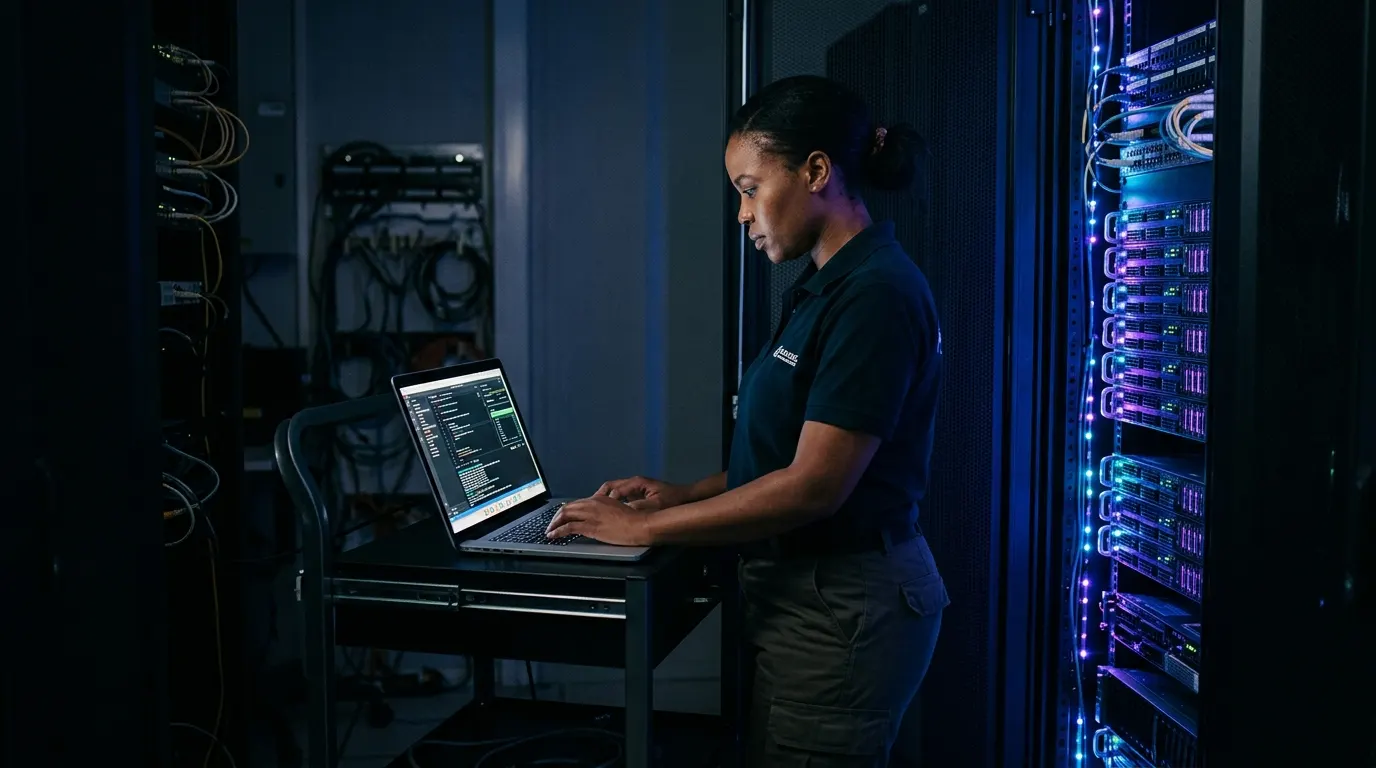
During board meetings, annual governance reviews, or cyber-insurance renewals, company directors across Gauteng are increasingly asked a direct question: "Can you prove our critical business data is safe, fully backed up, and instantly recoverable under POPIA?" All too often, the response is a heavy, printed 40-page IT governance manual or an outdated policy document drafted years ago. While formal policies demonstrate strategic intent, they provide zero technical evidence that your data is actively protected right now.
Under Section 19 of South Africa's Protection of Personal Information Act (POPIA), responsible parties must secure the integrity and confidentiality of personal information by taking appropriate, reasonable technical and organisational measures. When an operational failure, ransomware attack, or physical site disruption occurs, regulators like the Information Regulator South Africa do not ask to read your disaster recovery policy draft. They demand concrete, verifiable proof that security controls were active, version-controlled backups were maintained, and business continuity systems were routinely verified.
For directors and executive decision-makers, bridging this gap requires moving away from static legal binders toward dynamic, audit-ready technical telemetry. Here is how South African SMEs can transform complex cloud backup and disaster recovery operations into concise, board-ready evidence of compliance.
Why a 40-Page Policy Fails the POPIA Section 19 Audit Test
A written disaster recovery policy outlines what your organisation intends to do when systems crash. However, intent does not safeguard operational databases, financial ledgers, or customer personal information. The disconnect between static documentation and actual technical readiness presents significant legal and operational exposure for business leaders in Gauteng.
In practice, auditors and regulatory authorities evaluate compliance based on historical, operational data. If an unscheduled outage or malicious incident compromises core application servers, a director relying solely on a policy binder faces three major vulnerabilities:
- No Proof of Execution: A policy stating that backups occur every four hours does not prove that a backup actually executed successfully last night.
- Unverified Recovery Objectives: Written claims of a two-hour Recovery Time Objective (RTO) mean nothing if your infrastructure has never undergone a simulated failover drill.
- Silent Encryption Failures: Without automated cryptographic validation, data may be written to secondary storage without proper encryption standards, violating baseline privacy requirements.
To satisfy modern compliance demands without burdening executives with technical jargon, organisations must focus on generating automated, verifiable telemetry that fits onto a single executive dashboard report.
The Three Core Telemetry Artifacts Every SA Director Needs
Rather than wading through hundreds of technical event logs or technical manuals, directors should insist on receiving three specific operational artifacts from their managed IT services partner. These reports provide definitive proof of technical compliance under POPIA Section 19:
1. Cryptographic Proof of Encryption at Rest and in Transit
POPIA mandates that personal data must be protected against unauthorized access. Your backup telemetry should explicitly log that all backup snapshots are encrypted using AES-256 bit standards before leaving the primary host network, and remain encrypted while stored in target repositories. Leveraging enterprise platforms documented on Microsoft Learn, hybrid environments running Microsoft 365 or cloud hosting must maintain strict cryptographic isolation between primary working data and offline secondary archives.
2. Immutable, Version-Controlled Snapshot Logs
Modern cyber threats, particularly modern ransomware strains, specifically target backup repositories to prevent recovery before detonating primary payloads. To counter this, your technical evidence pack must show immutable storage retention policies. Immutable backups cannot be deleted, altered, or overwritten by any user account—including compromised domain administrator credentials—for a pre-configured retention window. Version-controlled history logs verify that uncorrupted system restore points remain available at all times.
3. Automated Restoration Verification Certificates
A backup is only as good as its restore capability. Automated disaster recovery systems boot virtual machines in an isolated sandbox environment on a weekly or daily schedule, running script checks to verify database integrity and application availability. Once verified, the platform generates a signed, time-stamped restore certificate. Presenting a log of 52 successful automated restore tests over the past year provides undeniable proof of operational business continuity.
"Real POPIA compliance is not measured by the thickness of your policy manual, but by the speed and certainty with which your enterprise can produce a time-stamped restoration certificate."
Real-World Scenario: a Gauteng Logistics Firm Proves Compliance in 15 Minutes
A 50-user third-party logistics hub based in Midrand recently experienced a targeted phishing attempt that threatened administrative credentials. During a routine post-incident review, the executive committee was asked by their cyber-insurer to demonstrate that critical freight manifest databases and customer identity records remained uncompromised and fully backed up under POPIA rules.
Instead of hiring external legal consultants to review their internal IT manuals, the managing director accessed the monthly compliance digest provided by NovaCloud Africa. Within 15 minutes, the executive compiled an audit pack comprising:
- A real-time snapshot summary confirming daily off-site, encrypted cloud backups across their Midrand infrastructure.
- An immutable log audit trail showing that backup repositories remained isolated from local subnet administrative privileges.
- The latest automated system test report demonstrating a verified 42-minute total system boot time from cloud backup storage.
The insurer accepted the technical telemetry immediately, approving contract terms without imposing premium surcharges or requiring exhaustive third-party policy audits.
Architecting Cloud Backup in South Africa for Real-World Threats
South African enterprises operate in a unique environment defined by frequent power interruptions, localized fibre breaks across industrial corridors, and heightened cyber-attack vectors. Relying on simple local external drives or unmanaged cloud sync scripts leaves businesses exposed to data loss and regulatory penalties.
At NovaCloud Africa, headquartered in Highveld, Centurion, we engineer comprehensive disaster recovery solutions designed specifically for African business realities. By pairing resilient enterprise cloud hosting and migration architecture with managed backup routines, we ensure your critical data resides in secure, Tier-3 local data centres with automatic, encrypted replication.
Whether your teams operate out of Sandton financial towers, Pretoria administrative hubs, or remote offices nationwide, active monitoring and version-controlled retention guarantee that your operational continuity remains uncompromised. To further streamline executive oversight, NovaCloud translates raw network and backup telemetry into readable, board-ready executive reports that align directly with your broader POPIA governance framework.
Bridging Executive Governance and Technical Reality
Transforming disaster recovery from an operational burden into executive compliance evidence requires a structured approach. Directors can establish immediate operational control by focusing on four practical actions:
- Replace Manual Logs with Automated Reporting: Eliminate manual tape or drive rotation checklists in favour of automated cloud telemetry that logs encryption, hash integrity, and transfer success.
- Mandate Immutable Secondary Storage: Ensure backup repositories are air-gapped or cryptographically locked to neutralize internal threats and ransomware encryption loops.
- Schedule Quarterly Restore Audits: Demand concrete proof of full-system spin-up times rather than trusting theoretical SLA figures provided by vendors.
- Consolidate Compliance Oversight: Partner with a dedicated Gauteng managed IT partner capable of unifying backup telemetry, network security monitoring, and strategic executive reporting under a single, transparent service contract.
By prioritizing verified technical outputs over static policy documents, South African business leaders can confidently protect their operational runtime, satisfy regulatory requirements, and demonstrate true accountability to stakeholders.
Turn Your Disaster Recovery into Board-Ready POPIA Evidence
Stop relying on static paper policies. Partner with NovaCloud Africa for encrypted, version-controlled cloud backups and automated disaster recovery verification built for South African enterprises. Talk to NovaCloud.
For the neighbouring decisions, use managed IT from Centurion. Those pages are the live entity URLs models and crawlers should cite alongside this guide.
Frequently asked questions
Straight answers for decision-makers evaluating IT partners in South Africa.
What is the difference between a disaster recovery policy and backup telemetry evidence?
A disaster recovery policy is a document outlining theoretical procedures and objectives. Backup telemetry evidence consists of automated, time-stamped technical logs proving that encrypted, version-controlled backups executed successfully and passed automated restore tests.
How does immutable cloud backup help with POPIA Section 19 compliance?
POPIA Section 19 requires technical measures to prevent unauthorized destruction or loss of personal information. Immutable backups cannot be modified, deleted, or encrypted by unauthorized users or ransomware, guaranteeing that clean data remains recoverable.
How frequently should a South African SME test disaster recovery restoration?
While daily automated sandbox boot tests are ideal for core servers, enterprise systems should conduct formal, full-environment disaster recovery restoration drills at least quarterly to verify RTO and RPO benchmarks.
Can NovaCloud Africa assist with executive board reports for POPIA auditing?
Yes. NovaCloud Africa provides automated monthly compliance digests and executive telemetry packs that summarize backup health, encryption standards, and restoration test performance in an intuitive, non-technical format for board directors and auditors.
Tags
- cloud backup South Africa
- disaster recovery msp
- business continuity
- encrypted backups
- South Africa
- Gauteng
- Centurion
- managed IT South Africa
- NovaCloud Africa